The Train to Nowhere

It’s Friday night and we’re in the middle of nowhere.

We left Finke National Park early with every intention of going to the rather unattractive sounding “Boggy Hole” wetland on the other side of the Finke River. This entailed a lengthy detour through the historic settlement of Hermansburg. We arrived early. Hermansburg had the feel of a ghetto, lots of chain wire, barbed wire, and dogs. Not the kind of place you want to leave a caravan and go off for the day. We gave Boggy Hole a miss and headed for Alice Springs.

Full of coffee, Cornish pasties and apricot slice we attacked the Old Ghan Railway. Running from Adelaide to Alice Springs via the bottom of Lake Eyre, mostly through desert country with shifting sand dunes and floods in the wet season, it was probably certain to fail from the day it started. Like most Government projects “it seemed like a good idea at the time”.

One could, and people have, written volumes about the Ghan Railway but the stand out story has to be the one where a woman complains to the conductor about labour pains. The conductor chastises the woman for boarding the train so late in pregnancy. She replies “ I wasn’t pregnant when I boarded you’re damned train”. The Ghan was nothing if not slow and unreliable.

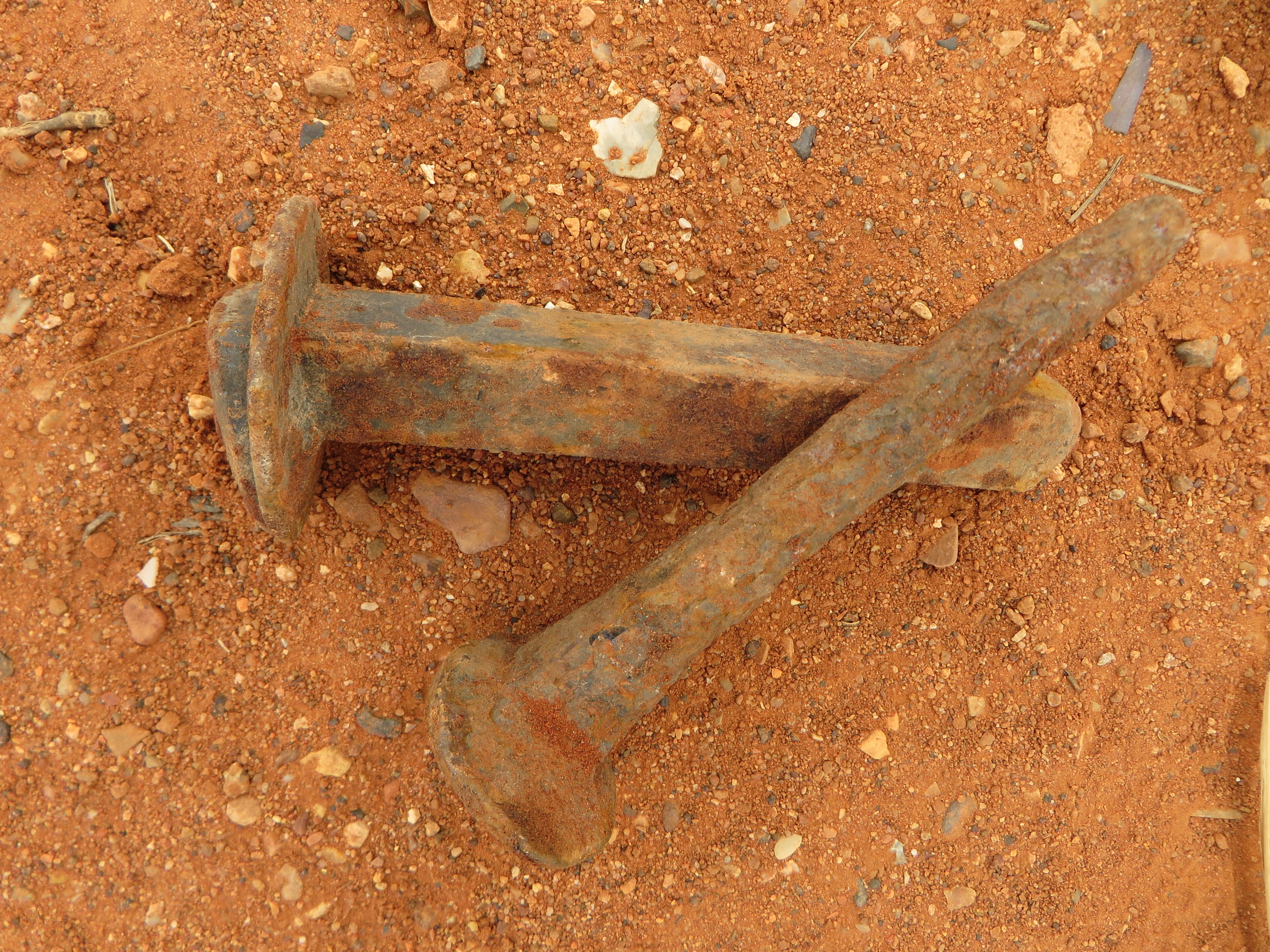
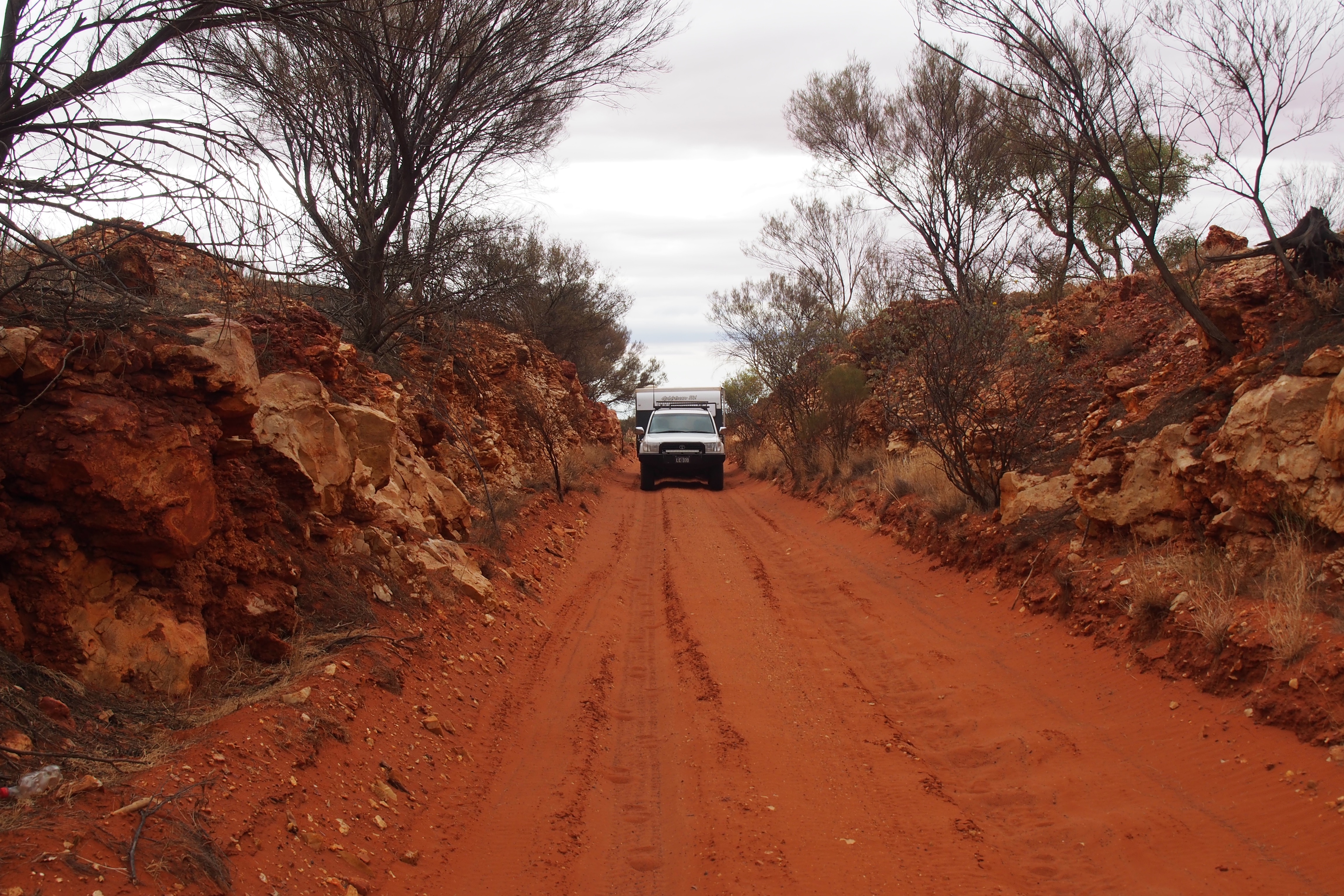
Our part of the Ghan’s track was from Alice Springs to Finke.  This section is mostly through the Simpson Desert and its rough, sandy, corrugated, dry and just about the worst road you can drive on. This is because its not really a road just the old railway corridor. The track and sleepers have all been removed, only the rail spikes remain, they unfortunately are a little tougher than your average steel belted radial. (Contributions to “Les and Jens Tyre Fund” are not tax deductible however they are greatly appreciated). There is an off road race in Australia called the Finke Desert Race, it also follows the Old Ghan Railway line from Alice Springs to Finke, it runs parallel to the road we were on most of the way. We actually travelled part of the racecourse and it was smoother than the road. Maybe they should move the road over a few feet.

I should mention that Finke is nowhere near Finke Gorge (see last post). Finke Gorge is named fort the gorge and Finke the town is named for the river it sits on. They are hundreds of kilometres away but on the same river. I Finke that’s sufficiently confusing.

Aboriginal rock carvings, that’s right carvings not paintings, thought to have been chipped with a chisel-like rock which was whacked with a larger hammer like rock, can be found on this route. They pre date the pyramids by tens of thousands of years. Unfortunately photographing the rocks is frowned upon. Fortunately I found some old black and white photos, no doubt taken before the sign went up, and I include them for your viewing pleasure.

So here we are in the middle of nowhere but were not in the middle of nowhere we are in fact in the middle of Australia, the exact middle in fact. This is the spot where, if Australia was siting on a pin it would not tip one-way or the other, it would be balanced (unlike some of my friends). The problem is that this point does not take into account any islands that are part of Australia. Tasmania, for example, not an insignificant island (in terms of weight at least) is excluded from the calculation. I suspect that this is because the inclusion would have upset the apple cart, Tasmania being the apple hub of Australia. There is also the problem of all those Tasmanians popping over to the mainland on the weekend, I’m not saying that they are overweight there’s just so many of them.

So here we are in the middle of AUSTRALIA its Friday night (Pizza Night), we are the only people here because camping here is frowned upon, and it’s a full moon. I know what you’re thinking, but no, we didn’t sacrifice a goat and dance around naked. We did however eat a sacrificial pizza and washed it down with a nice Coonawarra Red. We also lit a fire in case there were any aliens about curious as to the geographic centre of Australia.

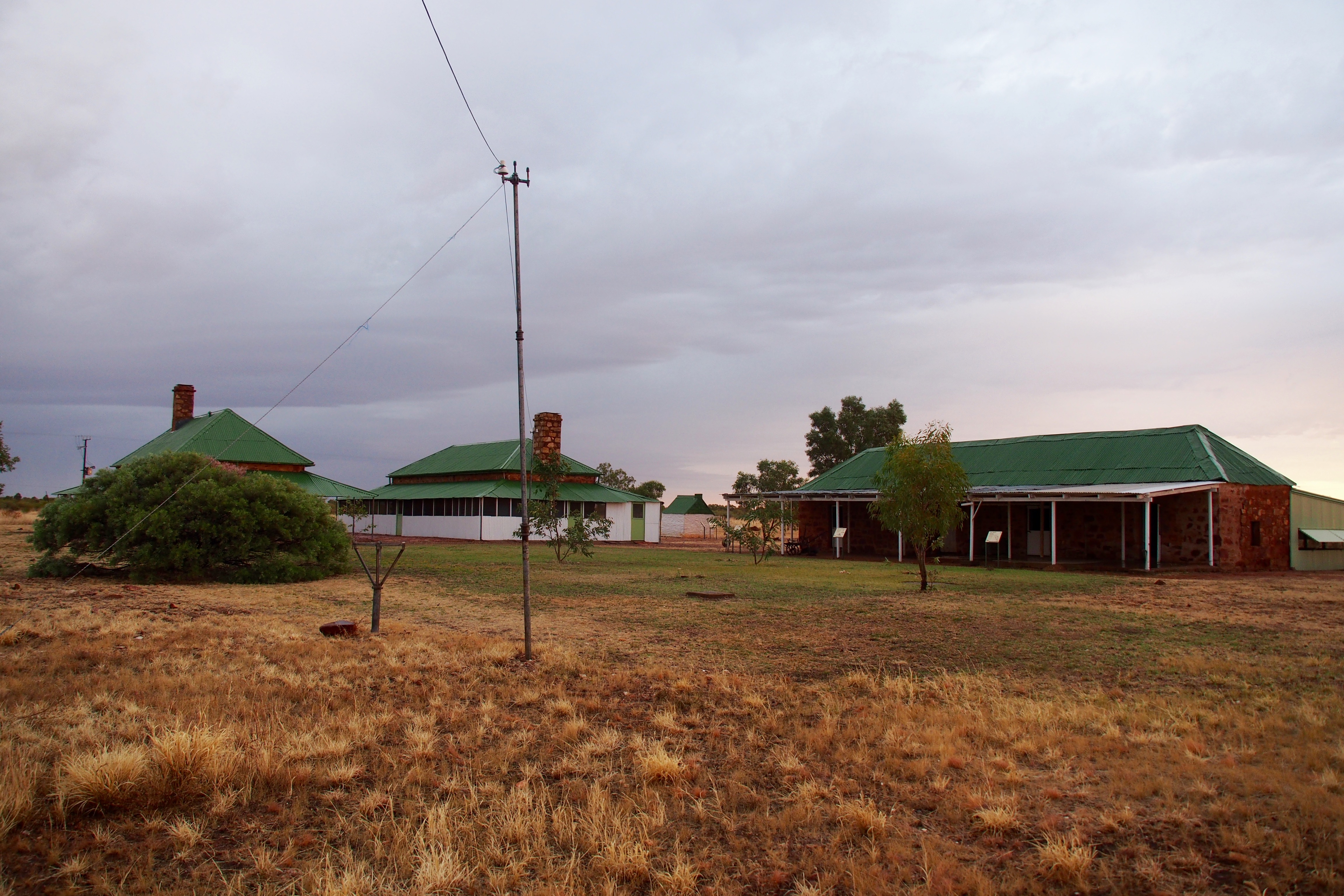
By the way the geographic centre of Australia is named after a Dr. Bruce Lambert a very well respected surveyor. “Lambert Central” has a lovely flagpole with an “Aussie Flag” which I saluted (being a good New Australian) unfortunately the flag is held on with cable ties and covered in bird poop. I hope this isn’t a sign of things to come……
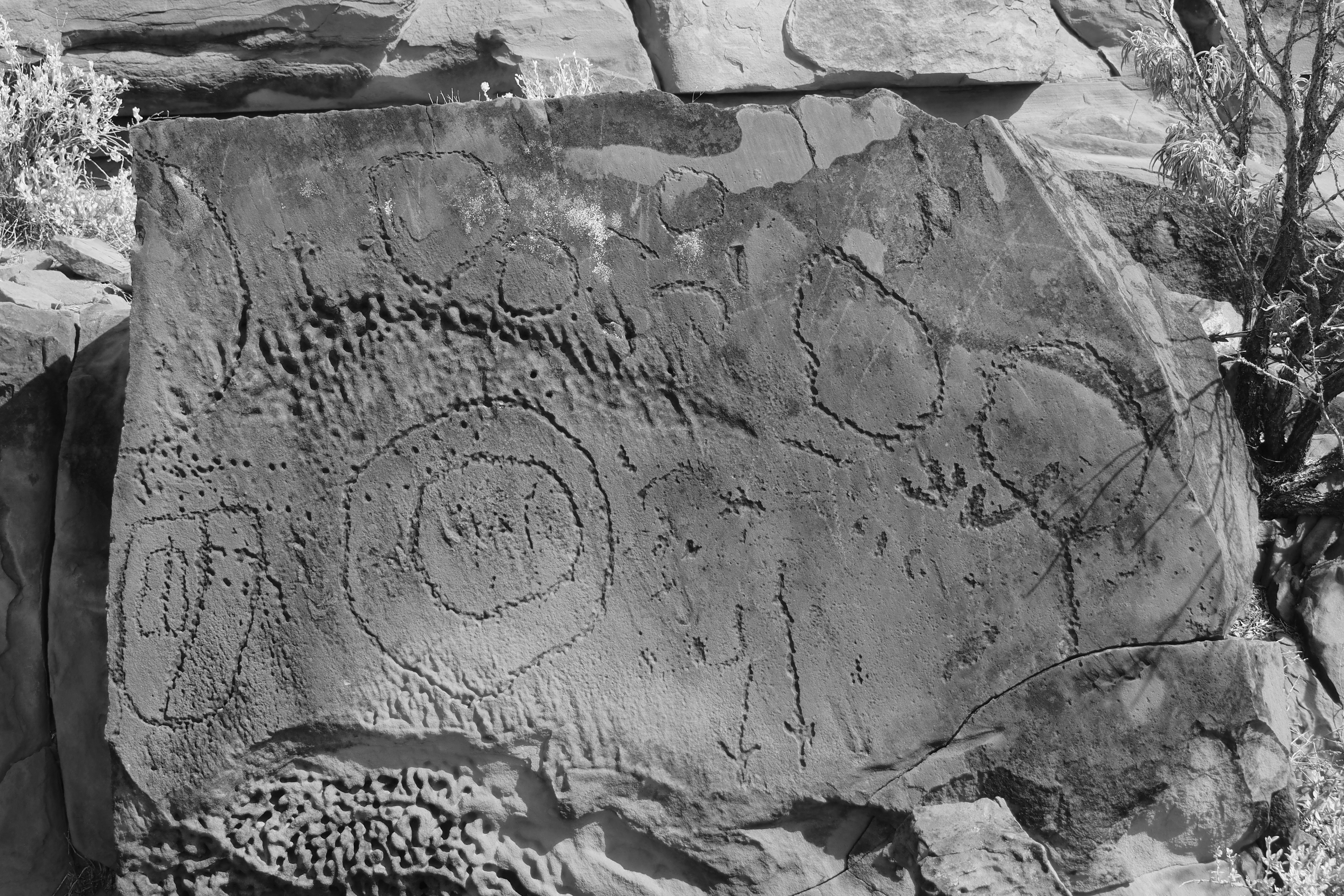
File photo rock carving 1

File photo rock carving 1

File photo rock carving 2

File photo rock carving 2

File photo rock carving 3
File photo rock carving 3

Natural Enemy Of The Rubber Tyre.

Natural Enemy Of The Rubber Tyre.

Filling Up.
Filling Up.

A Cutting On The Old Ghan Railway Line.

A Cutting On The Old Ghan Railway Line.

Sacrificial Pizza. And Red Wine (Australian of course)

Sacrificial Pizza and Red Wine (Australian of course).
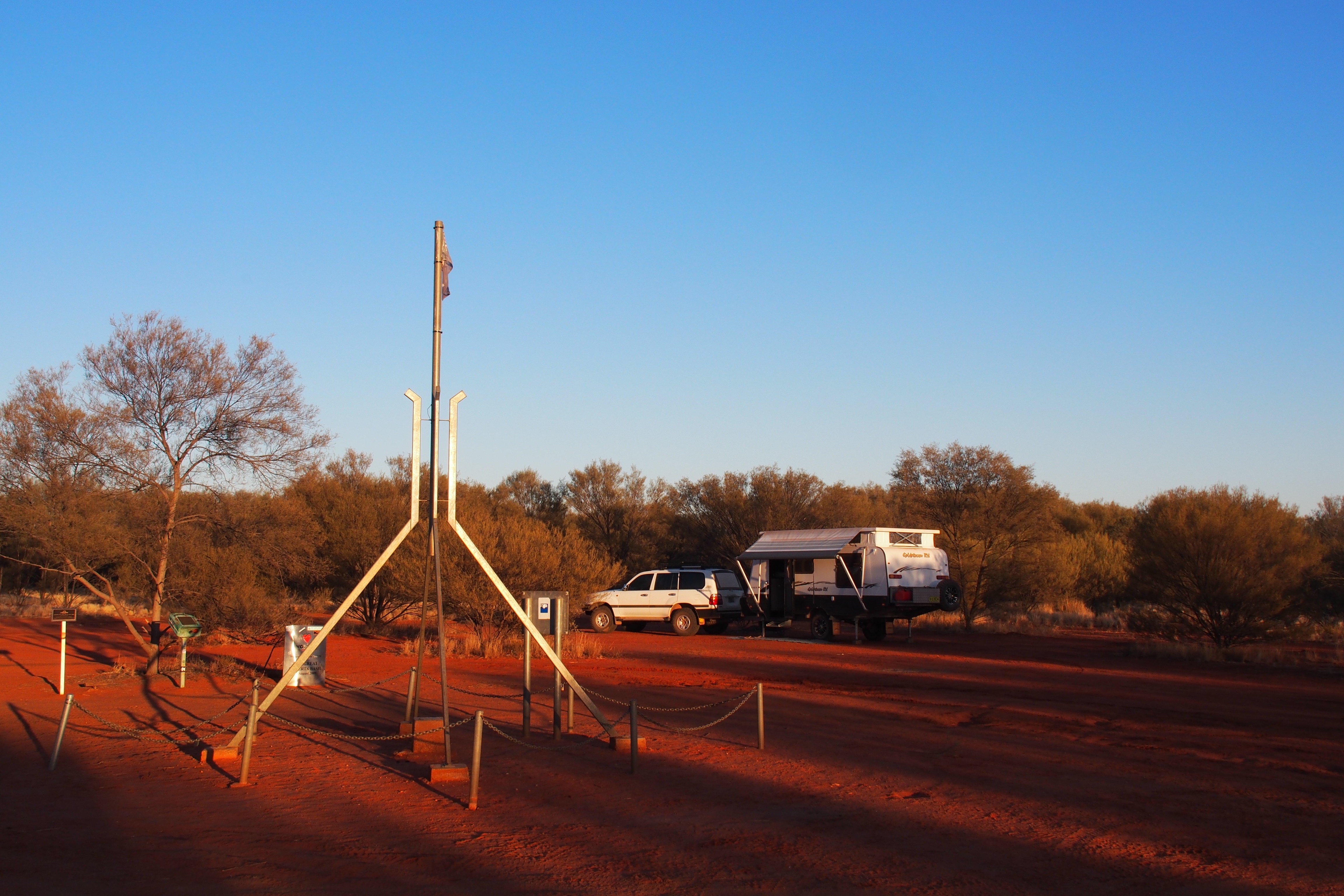
The Centre.

The Centre.

My Poor Flag!

My Poor Flag!

Finke


If the Finke River was having a birthday party there would be two hundred and fifty million candles on the cake, give or take. That makes the Finke River the oldest watercourse on the planet.

Having had a cursory glance at this aged stream I conclude that it is yet another one of those places where the pictures are better than any description my meager grasp of the English language can come up with. The best I can do is Awwwwww…. or maybe…. Oooooooo!

Access is via a four-wheel drive track so a lot of people don’t make the trip. The sign at the start of the track suggests that it is very arduous, we found it quite easy compared to the Gibb River Road, that is to say no wheels fell off, and lets face it the Paris to Dakar Rally is easier than the Gibb River Road.

The Finke Gorge track starts at Hermansburg, home of the famous indigenous landscape artist Albert Namatjjra. Driving through the surrounding countryside it’s not too difficult to see where Albert’s artistic inspiration came from.

Palm Valley in Finke National Park is quite unique it has a stand of Red Palm Trees that grow only in a two kilometre stretch where conditions allow for year round water. The leaves are red on the new growth and turn green as they mature, so if you visit don’t expect to see red palm trees like some people do.

OLYMPUS DIGITAL CAMERA

Veiw from Lookout

O3

Lookout 2

OLYMPUS DIGITAL CAMERA

Finke River Gorge

OLYMPUS DIGITAL CAMERA

Palm Valley

Red Palm

Red Palm

2

Palm Valley 2

A very short history of your Telstra bill

A rather restless night last night. Apart from the usual night terrors that accompany one on holiday, like how am I doing to pay the MasterCard bill, did I put the cat out, is the tap still running and do I really need to get up for a whizz,…….it rained and rained and rained. The fear then became are we going to be able to drag this holiday carnival out of it’s red-mud quagmire and back onto the bitumen.

Then the sun came up and all was well.

We are travelling south on the Stuart Highway named for the man who plotted the route way back in eighteen sixty. It took John McDougal Stuart two years to travel the three thousand kilometres. I have a mental image of “The McDougal Stuart” striding the plains in full Scottish regalia. Kilt, bagpipes, sporran swinging in the mid day sun, his red complexion no doubt giving a modern day dermatologist his very own version of the night terrors.

A capable driver can now complete Mr. Stuart’s two-year trek in two days thanks to the Northern Territory’s “open speed zones”. The open speed zones mean that you can drive as fast as you like, at your peril naturally.

The “Cannonball Run” race was once held in the Northern Territory, no doubt due to the liberal speed limit. There is a memorial to a couple of participants that on the race results were listed as DNF (did not finish).

Where was I ….Oh Testra. Back in the eighteen seventies, the Australian government commissioned the overland telegraph line. This was to link Adelaide in the south, to Darwin in the north along Stuart’s route.

The statistics for the line are quite staggering. Eleven telegraph stations, three thousand kilometres of wire across very inhospitable countryside, thirty six thousand telegraph poles at a cost of four hundred and seventy thousand pounds. The cost of sending a ten-word telegram was one pound ($2). This allowing for inflation would now be $50 for your ten words.

The last time we travelled away we returned to a $10,600 (that’s right ten thousand six hundred dollar) mobile phone bill. After much argument Telstra agreed that it may have been a slight overcharge and refunded about ninety nine percent of it, much to their credit (ha ha….credit , get it). Anyway, now I at least know what scale of rates they were using.

Sunrise at Tennant Creek

Sunrise at Tennant Creek

Telstra's head office 1860

Telstra’s head office 1870,s

1

Sunrise at Tennant Creek

Stomatolites and White Waterfalls

We were so impressed with Mr. Gregory’s efforts in the north that we decided to explore the National Park named in his honour. Fifty odd kilometres of dirt found us at Bullita Homestead (now abandoned) where we spent an unrushed couple of days exploring the area. Now don’t get me wrong, it’s a lovely park well stocked with flies and numerous other biting insects, it has a rather ordinary escarpment walk, a river that would be great for swimming in except that its infested with saltwater crocodiles. The ranger station information describes the climate as “hot and dry in the winter months and hot and humid in the summer months”. What more could the budding masochist hope for… Oh look …..are they locusts.

The two, count them, two standouts here, in no particular order, are the Stromatolites and the calcite flow.

For those unfamiliar with the above a brief description of each follows.

A Stromatolite is considered the oldest evidence of life on this planet; it is basically a whole mess of primitive bacteria that formed cabbage like colonies to feed off passing sediment. These dozy bacterial cabbages, too slow to move, became fossilized in the rock. See picture.

A calcite flow is a flow of calcium rich water that when made turbulent, by running over stuff, releases carbon dioxide and allows the formation of calcium deposit on the stuff it is running over. See picture.

Apologies for the scientific nature of the above description, however I did include pictures for the layman.

White Waterfall

White Waterfall

The Road In

The Road In

Stromatalites

Stromatalites

Gregory

Hands up anyone who knows about the exploits of Charles Augustus Gregory. OK, I’m the only one with his hand up, but I get a free pass being a new Australian.

Chuck, as he would be called today, was a pretty clever fellow, he established an out-post in Northern Australia from which he was able to do his exploring. Unlike Leichardt who killed off most of his helpers Gregory set up a camp by a permanent river (water being handy if you are homo erectus by design) and shipped in supplies (by ship surprisingly enough) to stock his “northern safaris”.

Chuck is credited with, amongst other things, the invention of the packsaddle, which replaced the old English horse hardware used up to this time. Chuck experimented with dehydrated food to make it last longer and lighten the load for pack animals. He also built a compass, which could be used while riding a horse thus speeding up his surveying efforts, although using the compass while riding did lead to more tail end accidents, much like the mobile phone.

Impressed yet?

One of Chuck’s better-known exploits was the day his horse trod on a crocodile tail while crossing the Victoria River. This feat of bravado was captured by watercolour artist Thomas Baines.  Young Tom was obviously quick with the brush, to get so much detail in such a short time, f1.4 at 1500 and ISO 200 probably. I would have to check with Lyndal on that one, being the most awarded relative, photographically at least.

Chuck’s biggest problem, apart from the crocs, was his botanist companion Dr. Mueller who, perhaps due to his size or riding ability, not only continually lagged behind but kept wearing out the riding stock. To compound Chuck’s distress the ship that transported supplies up the river fell apart on arrival and the horses on board (no doubt spares for the good doctor) drowned getting ashore. The drowning getting ashore I can testify is a real risk having attempted a “quick paddle” myself in the croc infested waters only to find myself knee deep in mud.

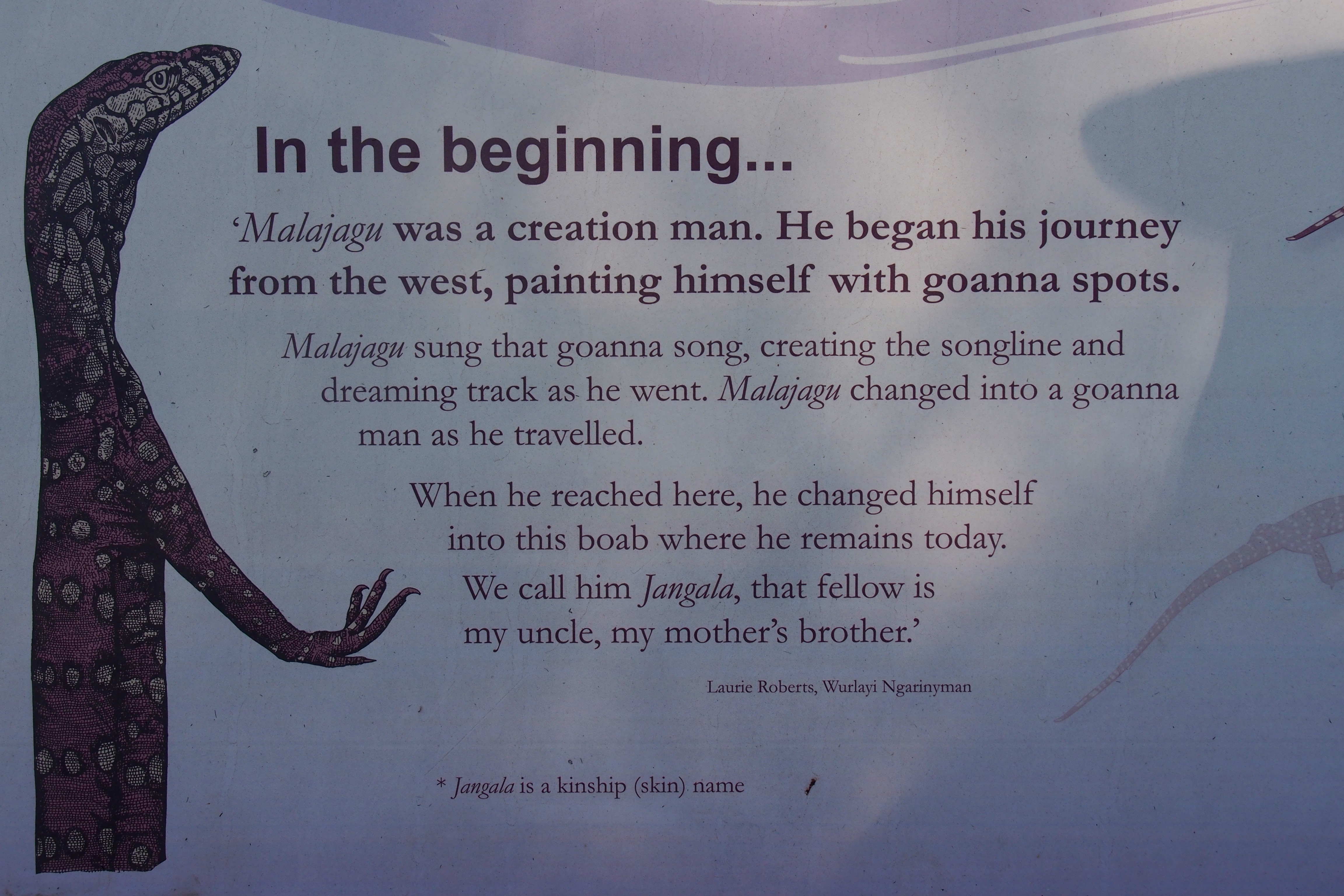
On the second of July eighteen fifty six Greg carved his name into a Boab tree and into history. The aborigines have a different story for the tree…..

Toms watercolour

Toms watercolour

Gregory's Tree

Gregory’s Tree

The alternate view.

The alternate view.

Dingo

Dingo

Bad day for some.

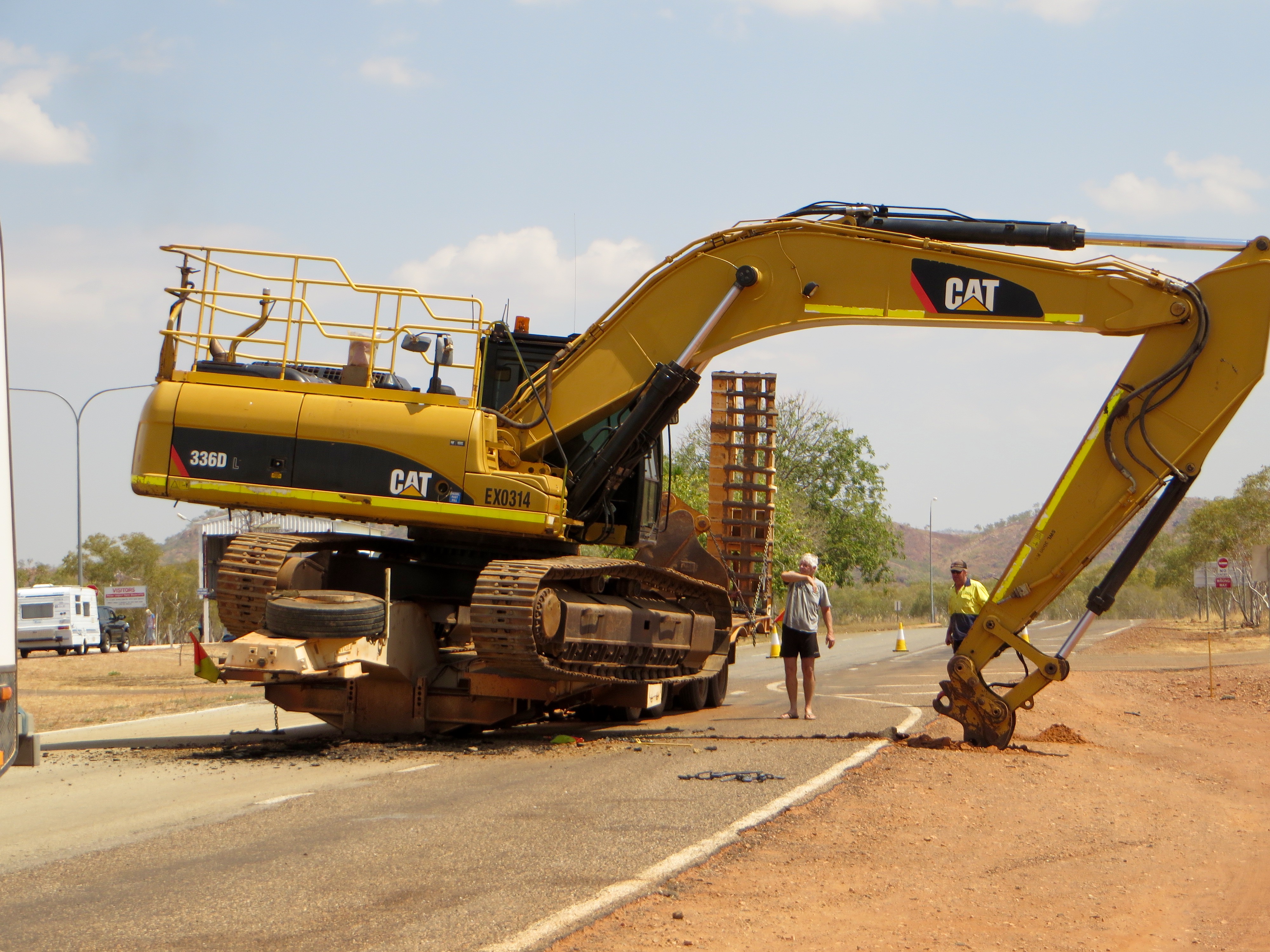
Right on the Western Australia and Northern Territory border your float trailer comes unstuck from your prime mover, plou ghs up twenty metres of prime bitumen and comes to a sudden halt after snapping ten high tensile chains, leaving your thirty-five ton excavator in a very unhappy place. Oh well at least the excavator stayed upright.

IMG_9695 IMG_9693

A Six Hour Block Of Non Stop Rock. The Flip Side.

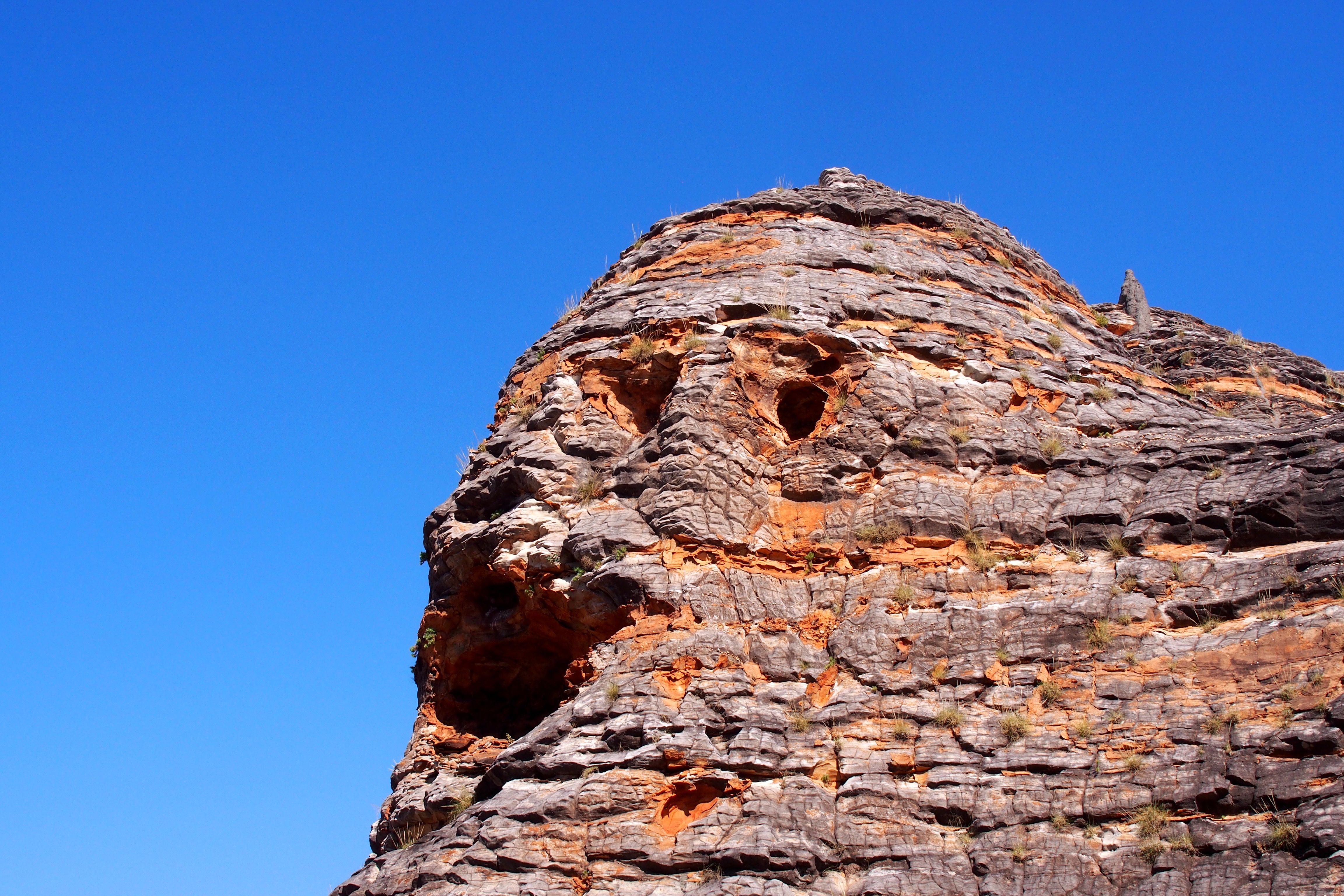
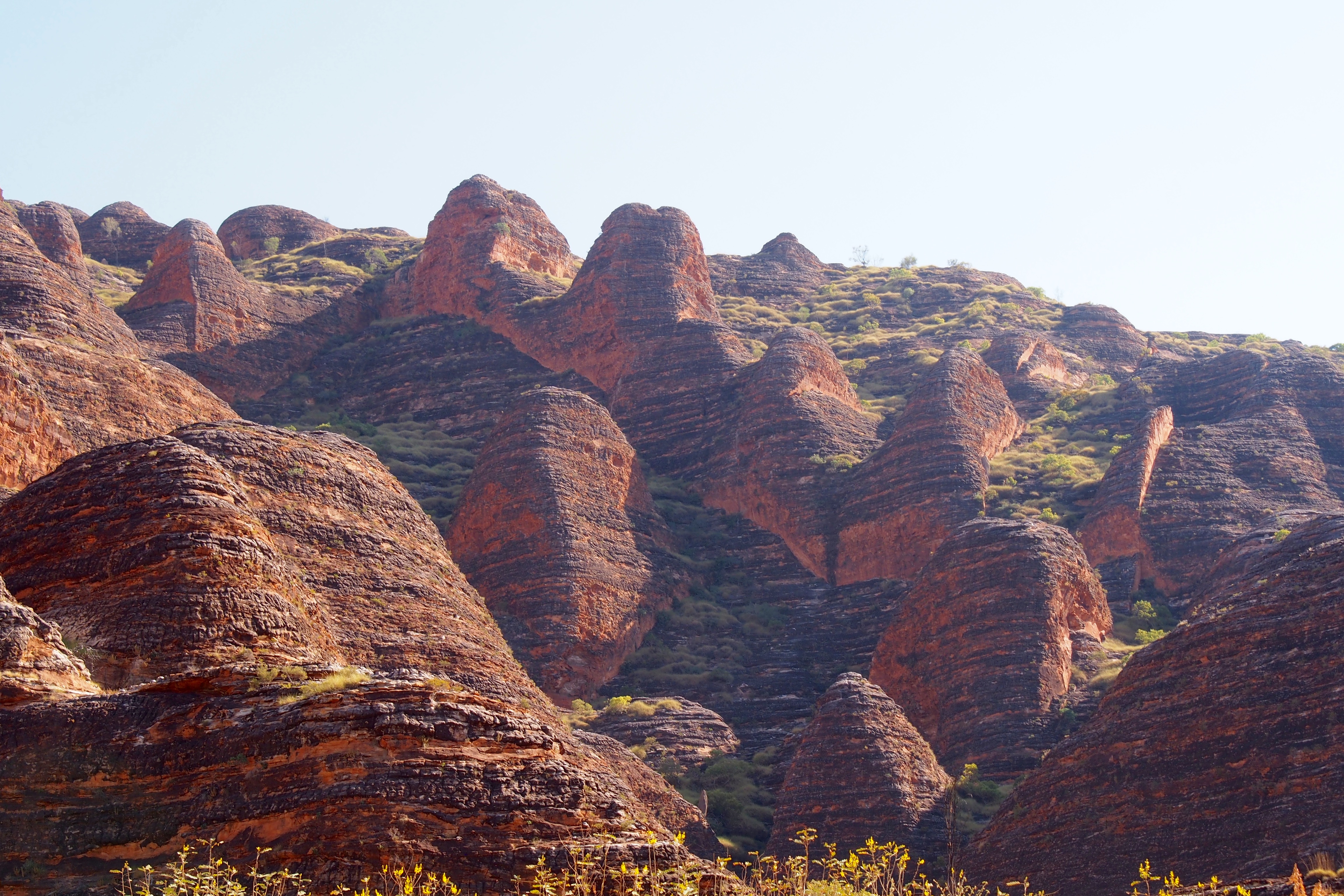
Look, I cant keep trying to come up with new and exciting adjectives to describe the Bungles Bungles. Let’s just agree that they are pretty special and that a picture is worth at least a thousand of my words. Probably closer to twenty five hundred, but who’s counting (its taken forty seven words to here by the way, think of the saving in one finger typing over, say ten or a dozen photos. That’s half a book!)

Cathedral Gorge.

Cathedral Gorge.

The Mummy's Face. Not you Mum.

The Mummy’s Face. Not you Mum.

Cleft in Twain. I've always wanted to say that.

Cleft in Twain. I’ve always wanted to say that.

More Bungles. I don't know, are these things called Bungles? Jen........What are these things called?

More Bungles? I don’t know…. are these things called Bungles? Jen……..What are these things called?

River Bed.

River Bed.

Bungle Bungle Bungle.......Etc.

Bungle Bungle Bungle…….Etc.

Overhang.

Overhang.

Every geological feature has to have a name. This ones called

Every geological feature has to have a name. This ones called “The Window”. How insightful is that?

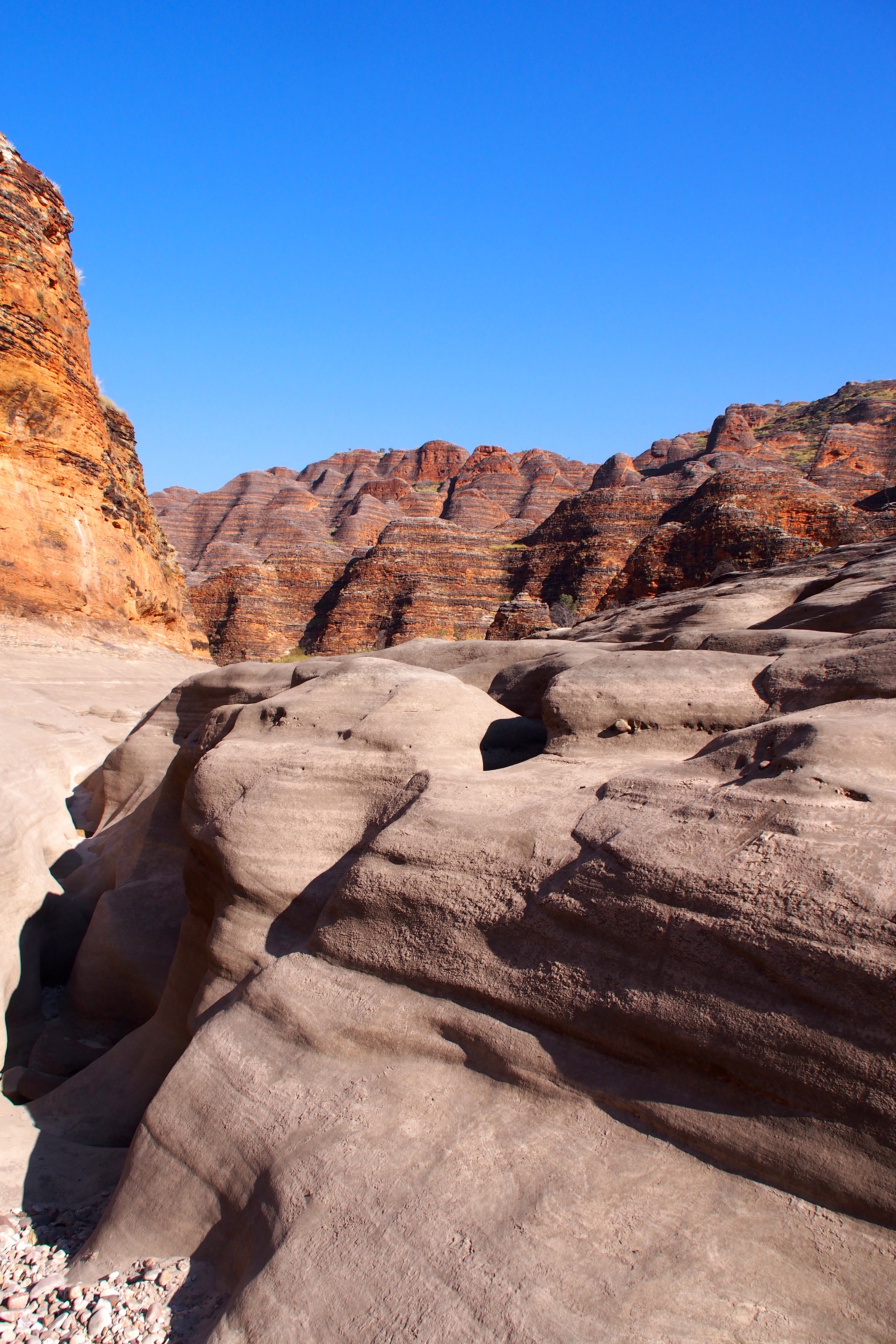
Sandstone River bed with more than a little wear from rain.

Sandstone River bed with more than a little wear from rain.

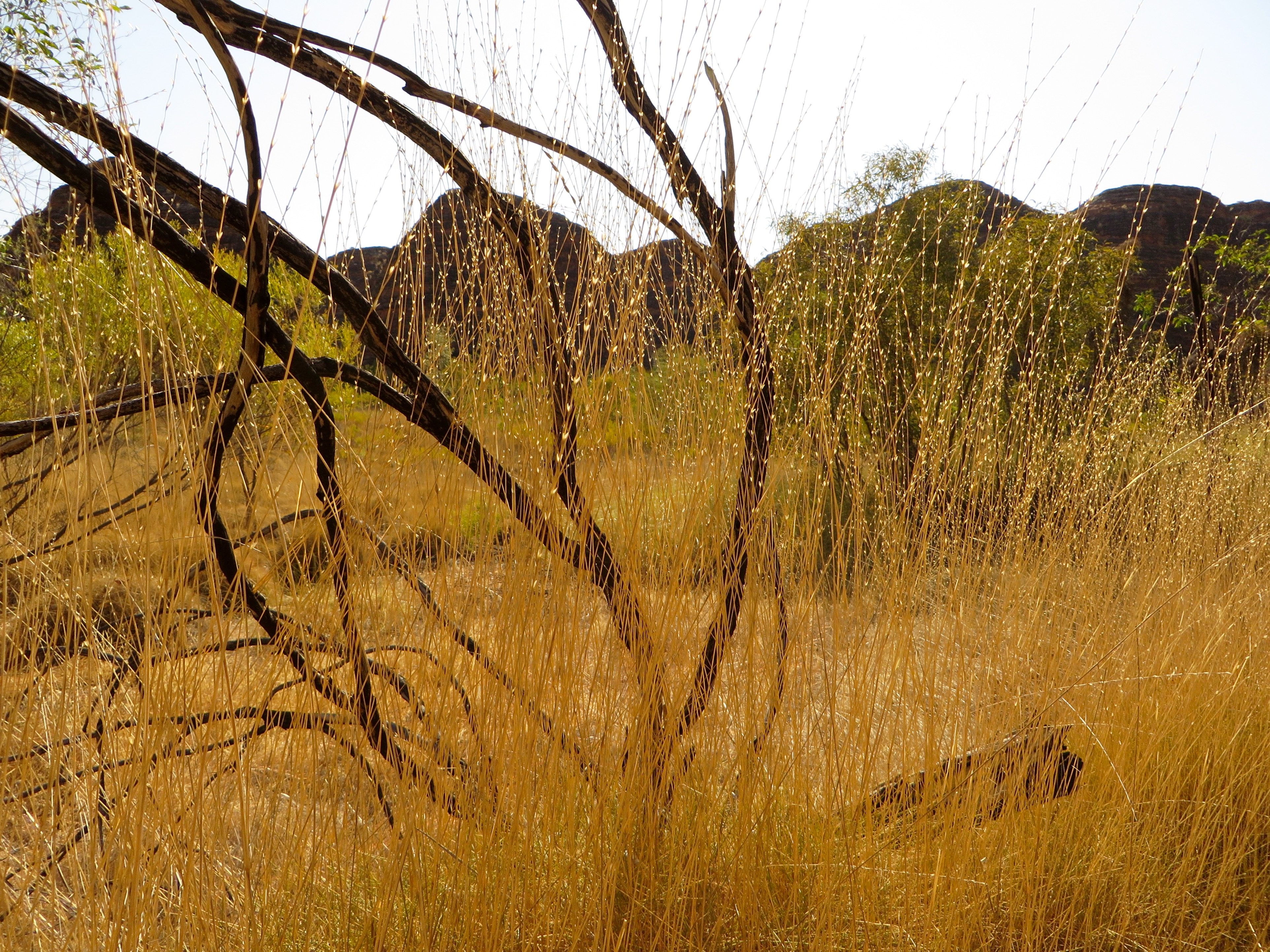
Jen's grasp of the unusual, or is it unusual grass.

Jen’s grasp of the unusual, or is it an unusual grass that she has grasped?

A Six Hour Block Of Non Stop Rock

Purnululu National Park or the Bungle Bungles is only about three hundred and fifty years old, some of the smaller mountain ranges in the area are one point six billion years old.

The Bungle Bungles are comprised of sandstone and conglomerate rock and have weathered to their current state though interaction with their environment, wind, water, drought heat etc. That’s it basically, that’s all you need to know, other than the Bungles Bungles are world heritage listed and in my opinion make Uluru look like a rock sitting in a paddock.

The palms grow anywhere they can get a grip.

The palms grow anywhere they can get a grip.

Sedimentary my gear Watson

Sedimentary my gear Watson.

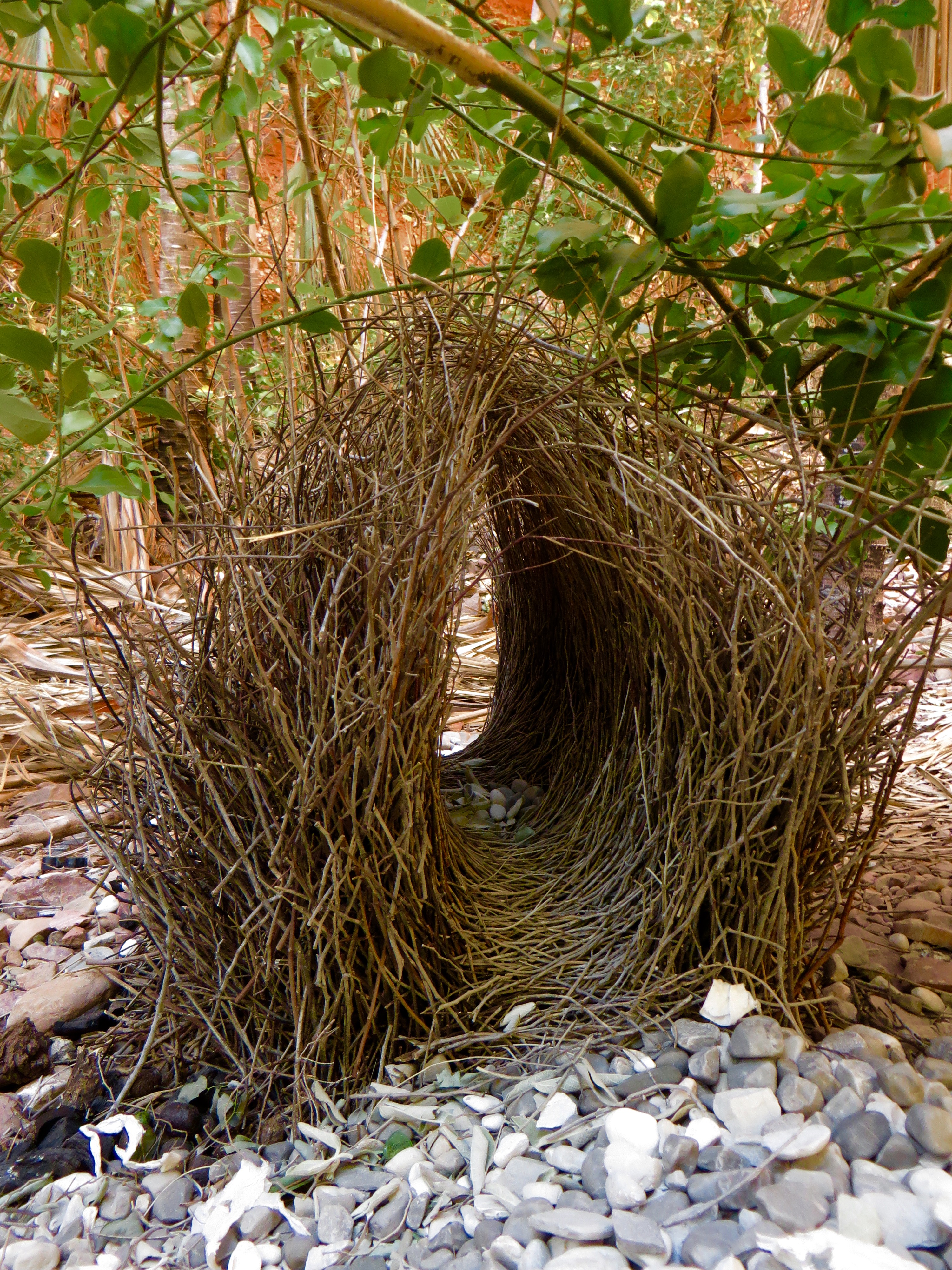
Great Bowerbird Bower

Great Bowerbird Bower.

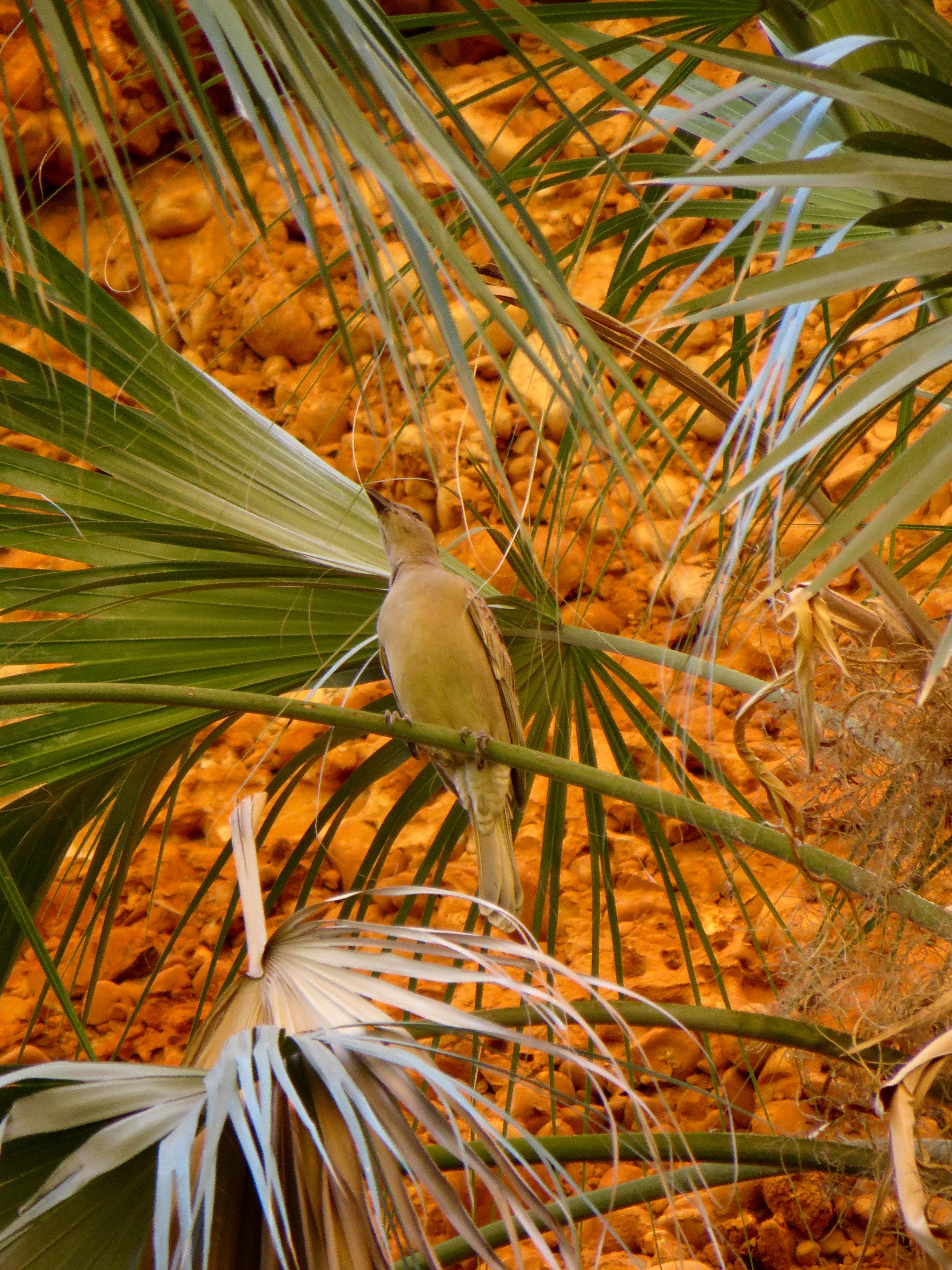
Great Bowerbird

Great Bowerbird. Well above average anyway.

Raiders of the Lost Ark One

Raiders of the Lost Ark. The sign said “don’t linger under suspended rocks”. So why build a ladder under one?

Echidna Gorge

Echidna Gorge.

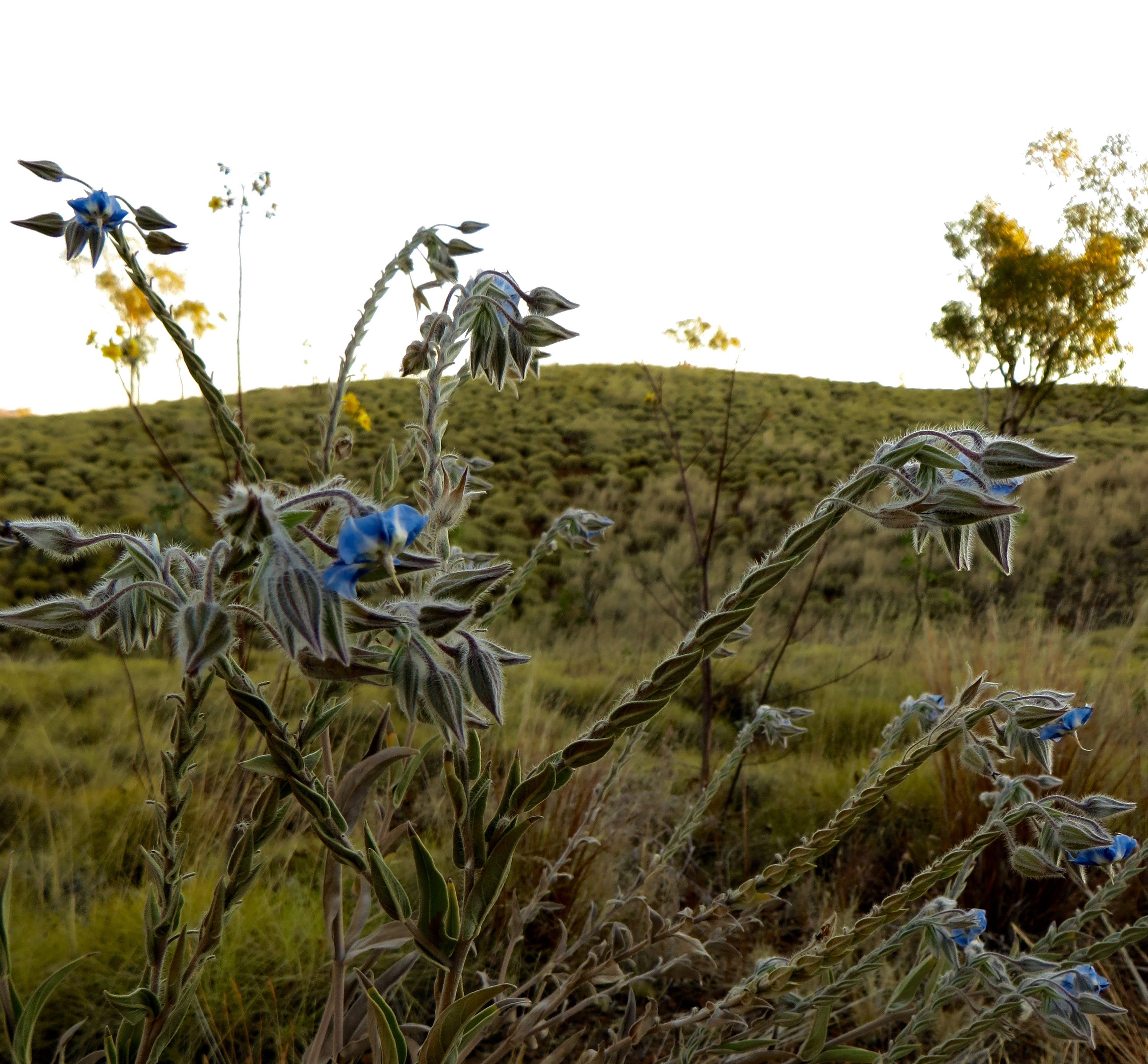
Triffid Plant

Triffid Plant.

Practically a weed according to the photographer (Jen).

Practically a weed according to the photographer (Jen).

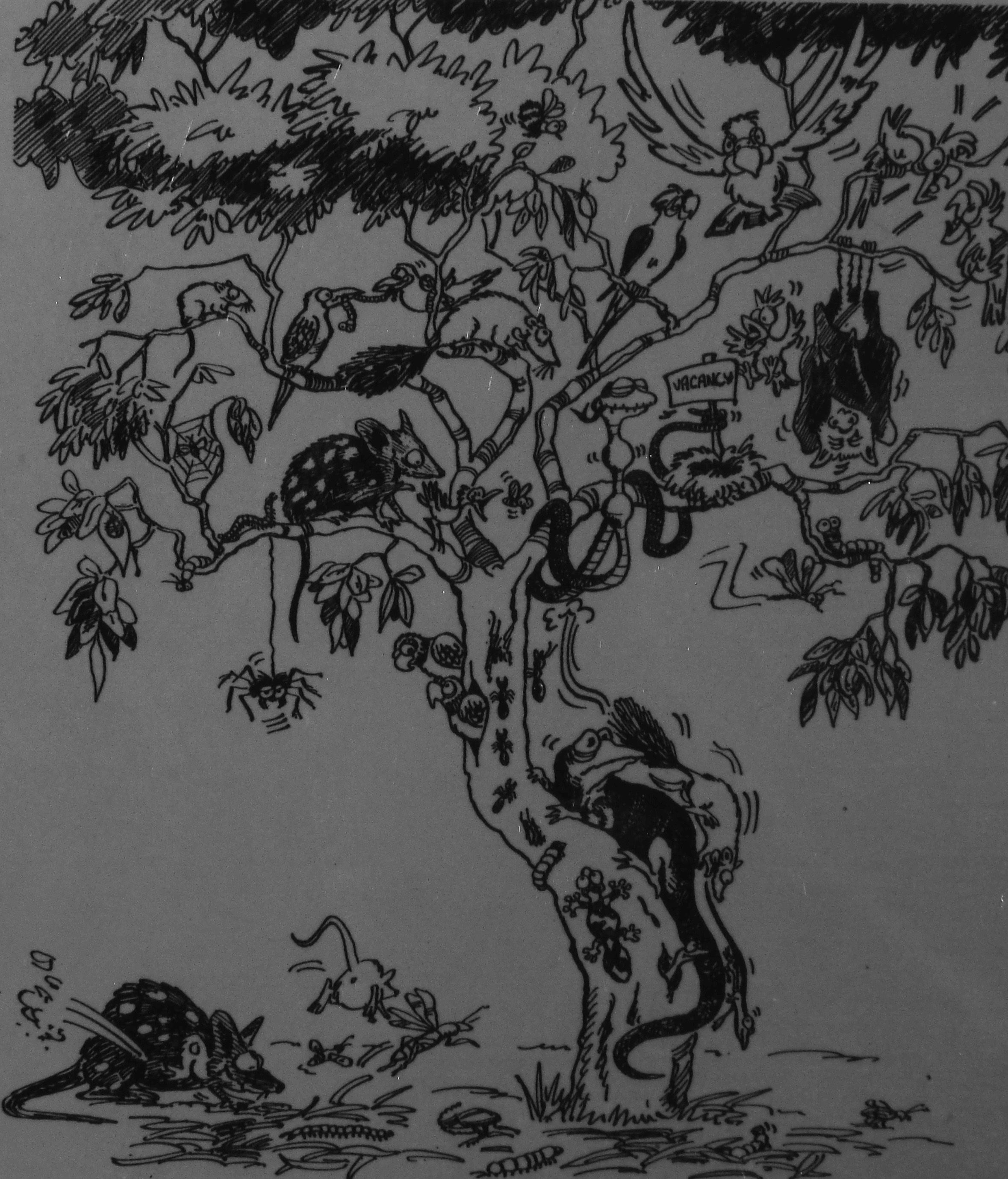
Simply

Simply “The Critter Tree”.

Sunset on the ridge.

Sunset on the ridge.

Northern Safari

Car not ready today so our northern safari has stalled temporarily. We will get it back tomorrow and leave post haste.

In the meantime I have some homework for all my newfound Aussie mates.

This comes in the form of a “who am I” so put you’re thinking caps on. One rule NO GOOGLE.

I was born in Tasmania Australia on the 8 September 1926.

I am a little known filmmaker and adventurer.

My adventures precede Les Hiddins (the bush tucker man), The Leyland Brothers, Steve Cropp, Malcolm Douglas, Steve Irwin and many others.

Isn’t this fun?

I took my wife Audrey and my sister Margaret together with Tiger, our fox terrier and made the trip in a 1948 Buick.

We recorded our journey with a 16mm camera and edited it to two hours. We film, and sometimes kill, a variety of Australian fauna. As intrepid adventurers we overcome obstacles like vehicle breakdowns and fording rivers.

Australian Screen says “The film was a huge success. He four-walled the film throughout Australia and overseas and became a millionaire. The film was seen by audiences many years before Crocodile Dundee, the Leyland Brothers, Harry Butler or Steve Irwin. He wrote a book about his adventures.”

That’s it if you didn’t get it ….

http://northernsafari.com/shop/northern-safari-dvd/ and someone buy a copy because I want to watch it.

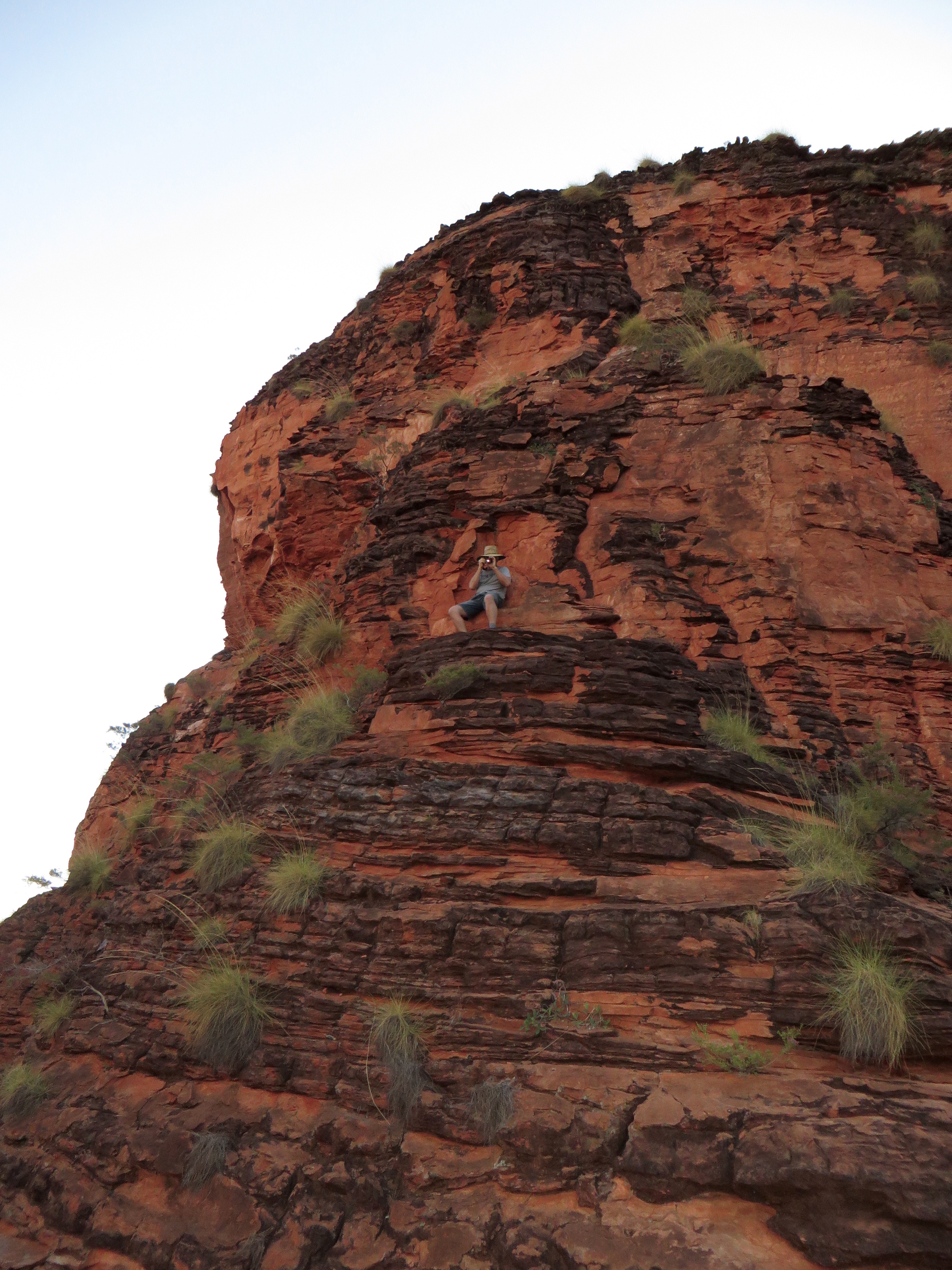
Happy Snapper

Happy Snapper

Mirima

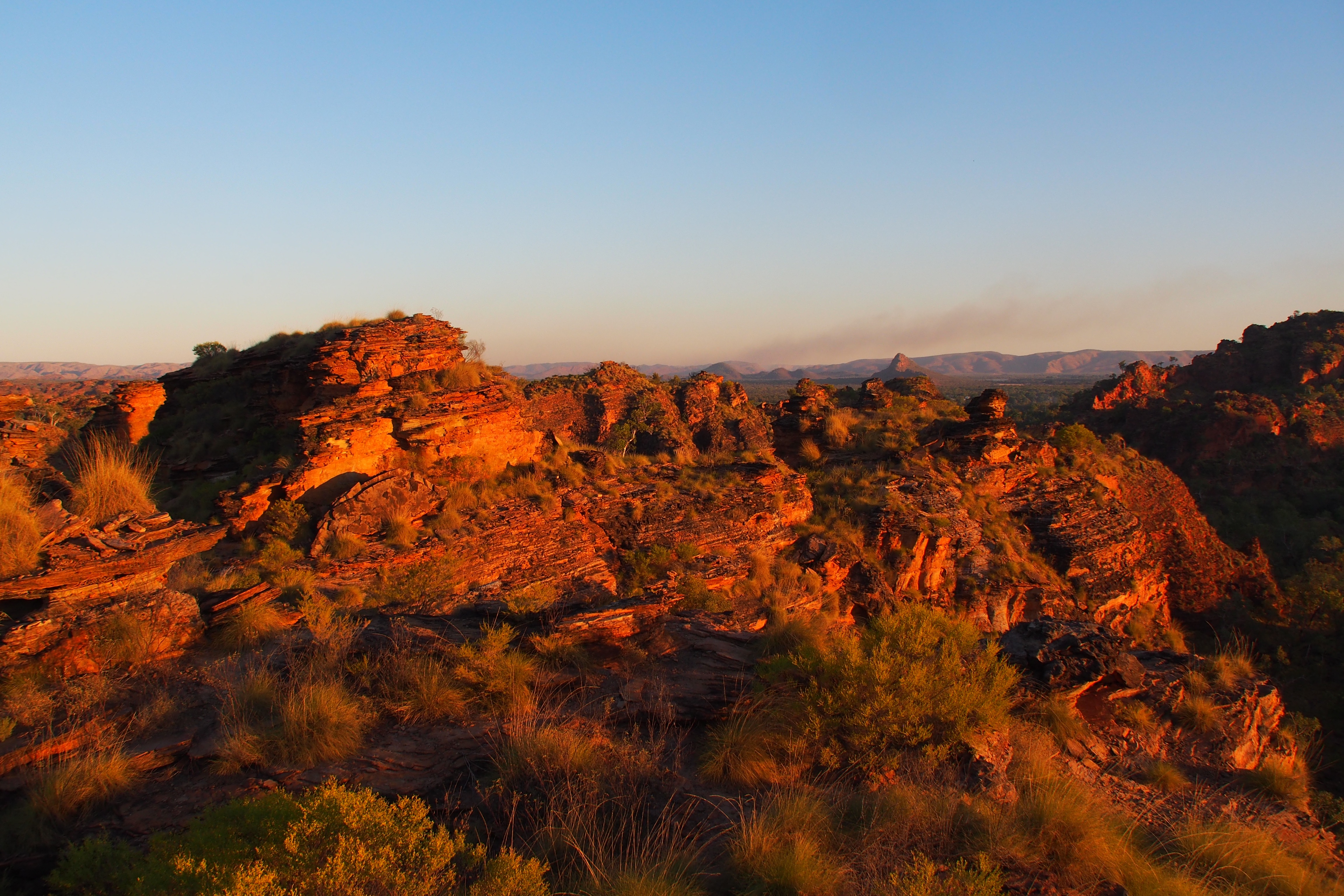
Mirima National Park, described as a miniature of the Bungle Bungle National Park, is situated adjacent to the industrial area of Kununurra. Despite being the last place you would expect to find a national park it offers a delightful walk over elevated platforms and excellent views in all directions, provided you don’t look to closely at the industrial area. Mirima is in fact part of the same Devonian reef as most of the national parks in the Kimberley region of Western Australia. Geikie Gorge National Park, Tunnel Creek National Park and Windjana Gorge National Park are also part of the Australian landmass that was submerged by a tropical sea about 350 million years ago. At 350 million years old the reef pre-dates dinosaurs and was part of a 1000 kilometre long ancient barrier reef. The area is rich in fossils of the extinct bony-plated fish called placoderms lending more weight to the geological explanation. I know, exciting stuff right?

Well that’s enough geology for one day. I’m off to town to be regaled with tall tales of how the parts didn’t turn up for the car and that they will be here sometime before Wednesday next week and so forth.

Some time later…………..

Well here I am back from town and shock horror the car is being repaired as I type and will most likely be finished by close of business today. We will thus wise be, very shortly, off to wherever we were going before we stopped going there. All that remains to be done now is to remember where we were going.

PS. Jen discovered more on the low age of the R.I.P.ers at the cemetery. A long time local explained that those who don’t die from car accidents and suicide (the main cause of death up to about twenty years old) eventually get smart enough to move to cooler climes and presumably die at a ripe old age somewhere else. That’s a relief, I think.

Life on the edge

Life on the edge

Spot Jen

Spot Jen

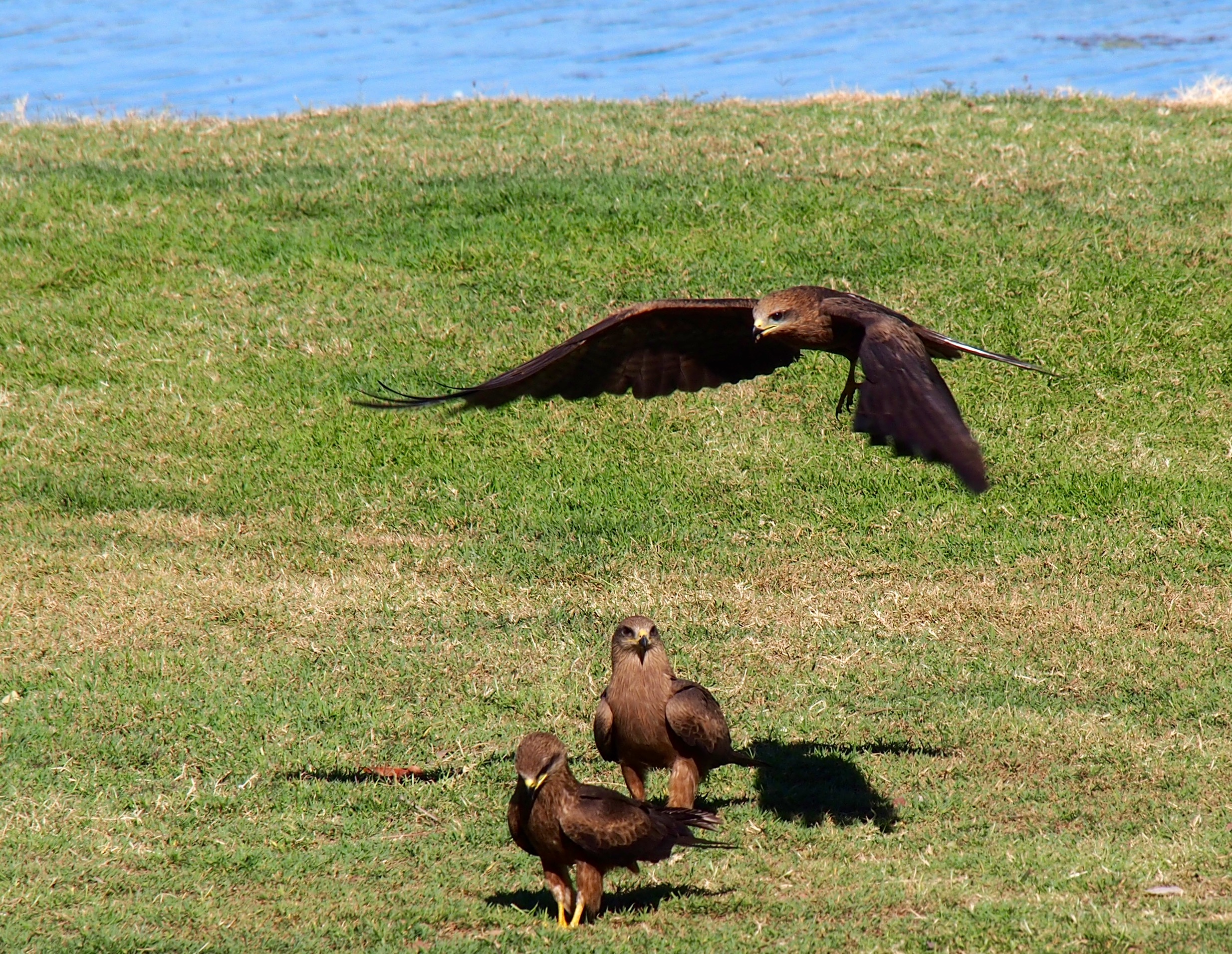
Kites

Kites

View from Mirima.

View from Mirima.

Thinks... When will car be ready.

Thinks… When will car be ready?